
Primary Years Programme (PYP)
In the Primary Years Programme, elementary (K-5) students at VICS build a strong foundation as curious, caring, and capable learners. Through guided inquiry, hands-on learning, and reflection, students ask questions, explore meaningful ideas, and begin taking ownership of their learning within their classroom, school, and community.
What is PYP?
The IB Primary Years Programme is designed for elementary students and focuses on the development of the whole child. At Valley, the PYP framework supports students in grades K–5 as they become inquirers, thinkers, problem-solvers, and knowledgeable individuals.
Through student-centered, inquiry-based learning, students build critical thinking and problem-solving skills. Educators use a collaborative and reflective teaching style as they integrate subjects such as language, mathematics, science, social studies, physical education, and music.
This approach sets a strong foundation for lifelong learning and prepares students to navigate the world with confidence and empathy.
Student Agency
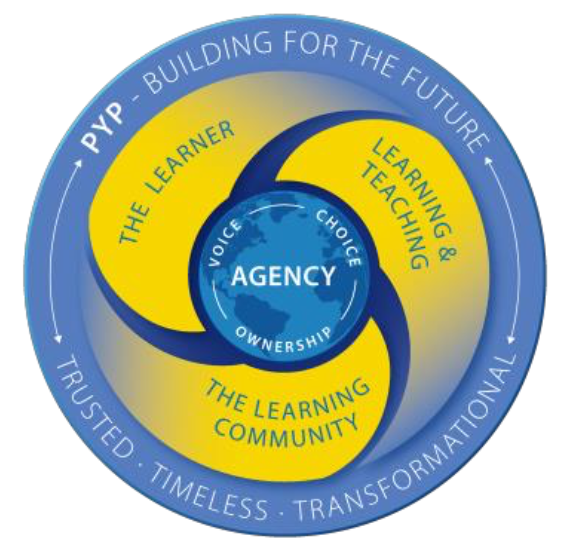
Student agency is central to PYP, where students are active partners with a voice and choice in their learning. At VICS, elementary students are encouraged to ask questions, share ideas, make meaningful choices, reflect on their progress, and take ownership of their next steps. Teachers guide and support students while helping them grow in confidence, responsibility, and independence.
Through this process, students become more engaged and confident learners. They begin to understand not only what they are learning, but why it matters and how they can use what they learn to make a positive difference.
Student agency is supported through three connected parts of the PYP experience:
The Learner
Students are encouraged to ask questions, share ideas, reflect on their progress, and take responsibility for their learning.
Learning & Teaching
Teachers guide students through inquiry-based experiences that connect learning across subjects and help students explore, create, collaborate, and problem-solve.
The Learning Community
Students, teachers, families, and staff work together to create a supportive school community where students are known, encouraged, and equipped to contribute.
Learning Through Inquiry
Because students are active partners in the learning process, PYP classrooms at VICS are built around inquiry. Students explore big ideas through transdisciplinary units structured around IB themes, connecting subjects and relating learning to real life.
For example, a unit may focus on how the world works or sharing the planet. Students might investigate a real-world topic, read and write about related ideas, create a project, present their learning, and reflect on how their understanding has grown. This approach helps students see how learning connects across subjects and how they can use what they learn in meaningful ways.
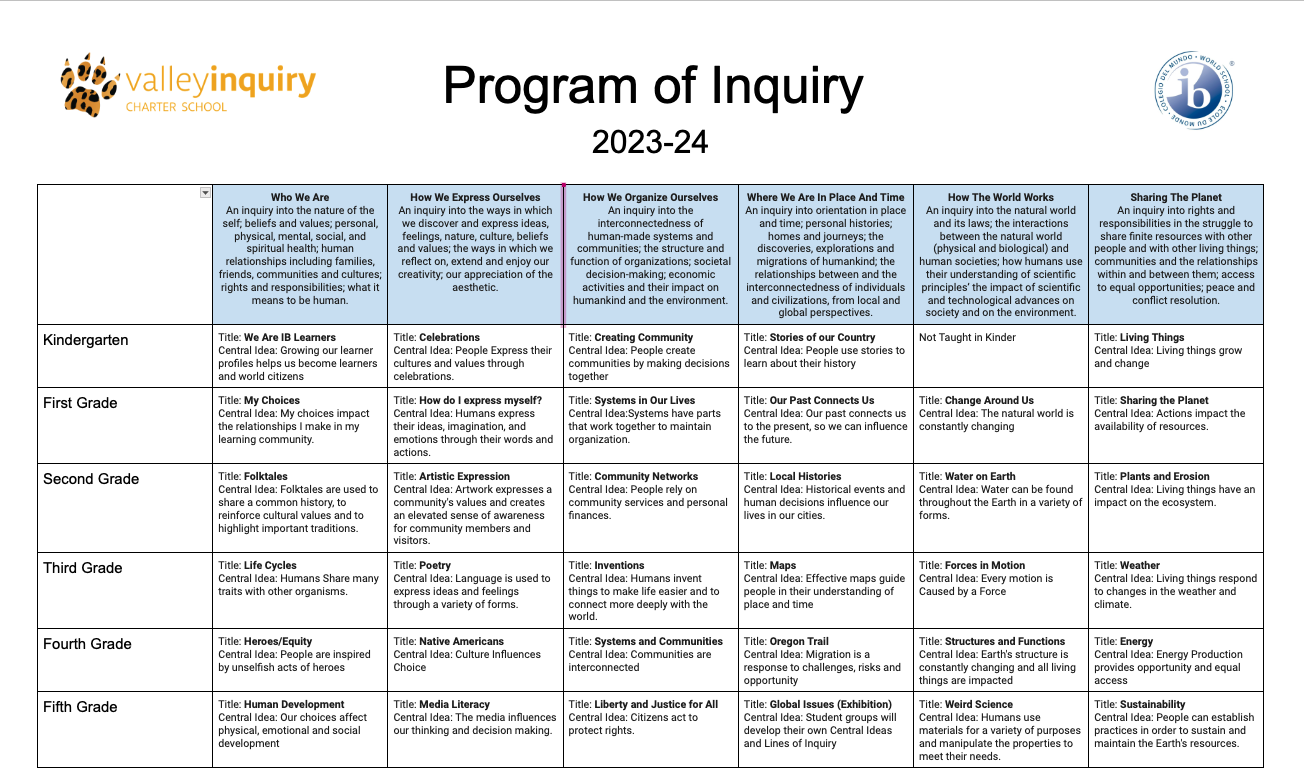
IB themes include: Who We Are · Where We Are in Place and Time · How We Express Ourselves · How the World Works · How We Organize Ourselves · Sharing the Planet
The Program of Inquiry chart below provides an overview of the themes and topics students may explore at each grade level. Units may vary slightly from year to year as teachers respond to student questions, current learning goals, and classroom needs.
Taking Action
Taking action is an important part of learning at VICS. As students explore big ideas through units of inquiry, they are encouraged to think about how they can use what they are learning to make a positive difference in their classroom, school, community, and world.
At VICS, taking action can happen in many ways, from classroom projects and student-led ideas to thoughtful choices that help others and care for the world around them.
After students take action, the reflection cycle guides them to consider what they did, analyze how it went, evaluate what they learned, and plan what they can do next. This process helps students understand their growth, learn from challenges, set goals, and apply their learning in meaningful ways.
The Reflection Cycle
Think About
What did you do?
What were you thinking?
How did you feel?
What happened?


Analyze & Evaluate
How successful were you?
What challenges did you have?
What was good or bad about the experience?
Conclusion
What could you have done differently?
How could your results be changed?
Where do you want to make changes?
Action Plan & Goals
Where do you want to make changes?
What are your next steps?
How quickly do you want to make changes?
IB Program Evaluation Report
Authorized International Baccalaureate (IB) World Schools complete a formal program evaluation every five years. This process ensures the school maintains IB standards, reflects on its philosophy, and continuously improves student outcomes.
School Report Cards
The Oregon Department of Education compiles annual school report cards that provide a comprehensive snapshot of how individual public schools and districts are performing. These reports offer parents and communities key data points on student achievement, equity, attendance, and school environment.